
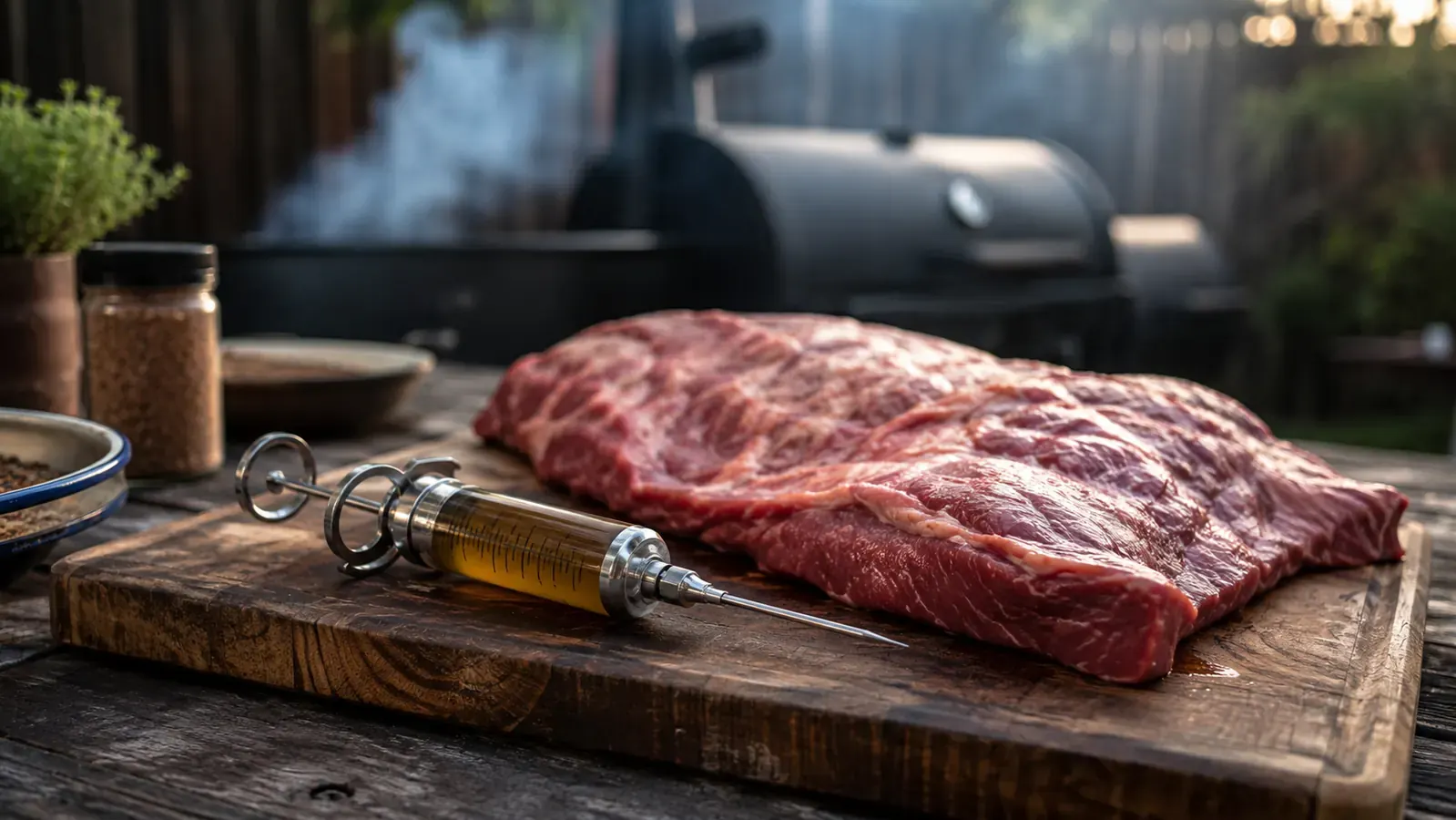
Last Memorial Day weekend I pulled a 14-pound brisket off my offset smoker after 14 hours of babysitting it, and the flat came out dry enough to sand furniture. My brother-in-law was kind about it. My dad was not. I had been skipping injections because every cheap plastic injector I had tried either leaked all over the counter or clogged mid-push, and the cleanup turned into a project of its own. A few days later I ordered the Ofargo Stainless Steel Meat Injector Syringe Kit and decided I was finally going to figure out how to do this right. That was about five months and a couple of dozen large cooks ago, and the Ofargo is still the first thing I grab when a brisket or pork shoulder goes on the pit.
This review covers what I have actually learned from using the Ofargo injector across a full season of backyard BBQ: briskets, pork shoulders, bone-in chicken halves, a whole turkey at Thanksgiving, and a few racks of beef back ribs I tried injecting on a whim. I will tell you what works, what annoyed me, which needle does what, and whether I think it is worth the money compared to the plastic injectors most people start with.
The Quick Verdict
A well-built stainless injector that handles thick marinades without clogging, feels solid in the hand, and cleans up faster than any plastic model I have owned. The one gripe is the O-ring, which needs occasional replacement if you run it through the dishwasher repeatedly.
Amazon Check Today's Price →Still serving dry brisket? One injection the night before changes everything.
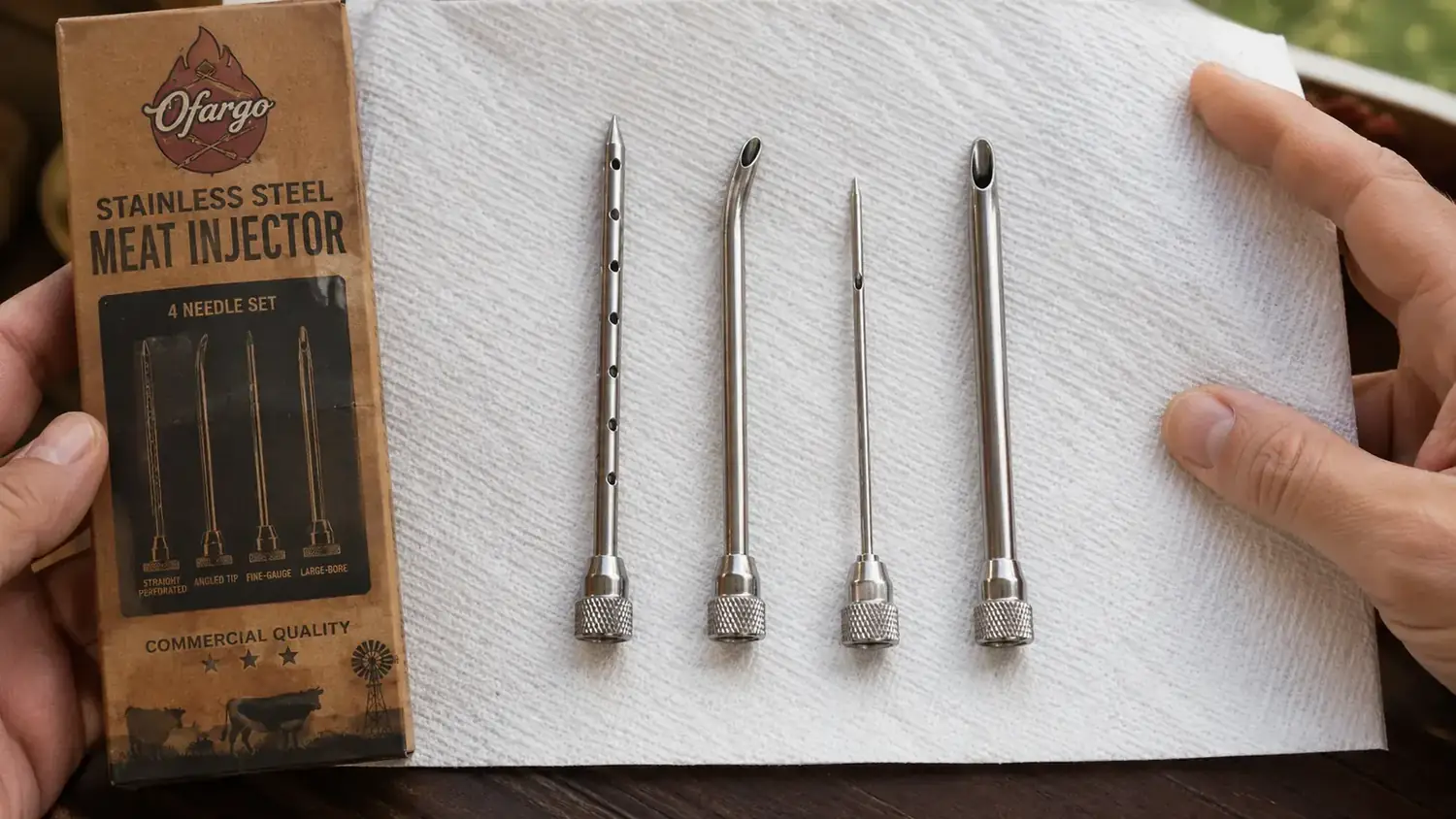
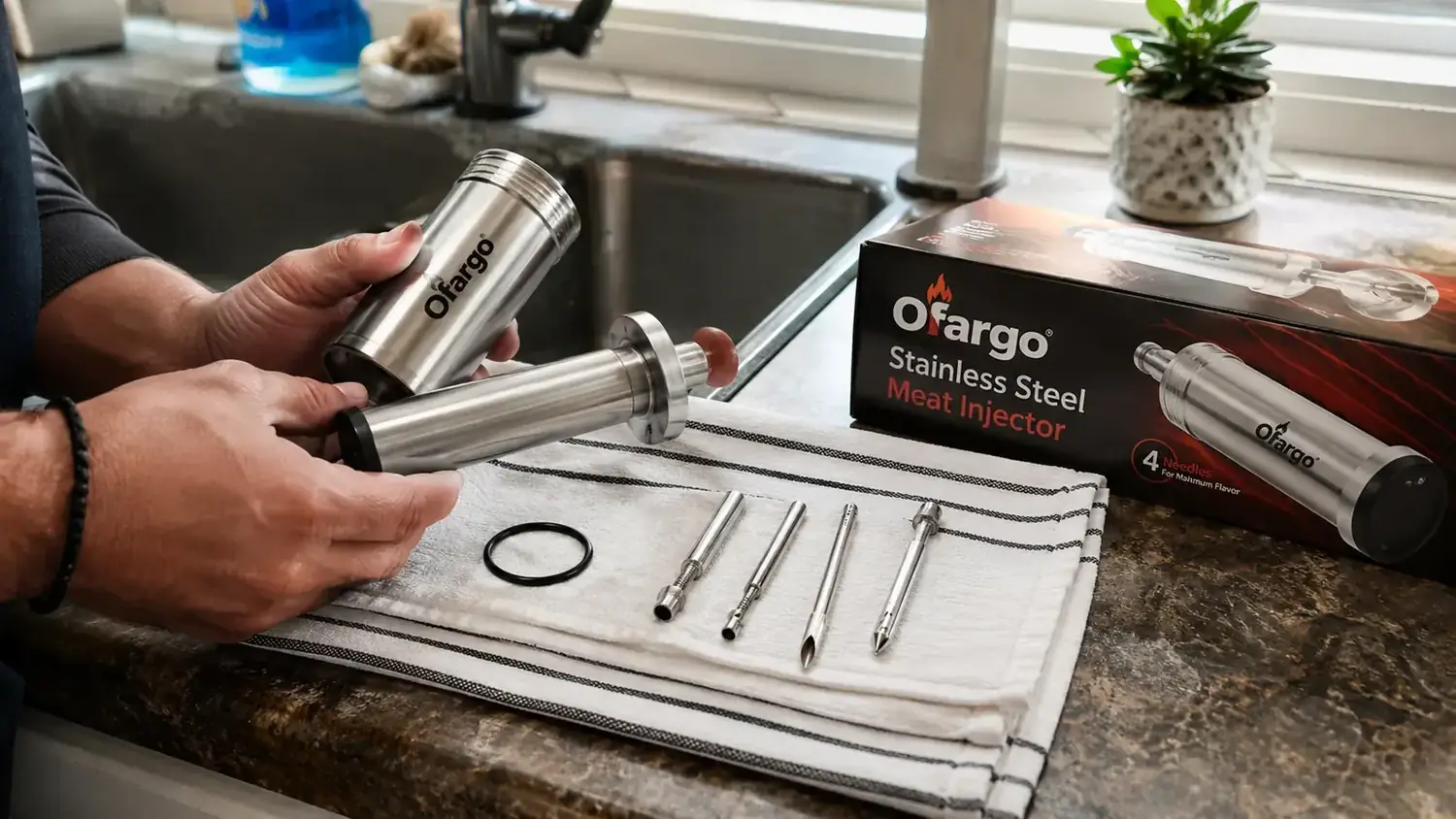
The Ofargo kit ships with four needle types, a 2-oz stainless barrel, and replacement O-rings. It covers everything from thin apple juice to thick garlic-butter marinades.
Amazon Check Today's Price on Amazon →How I Have Used It This Season
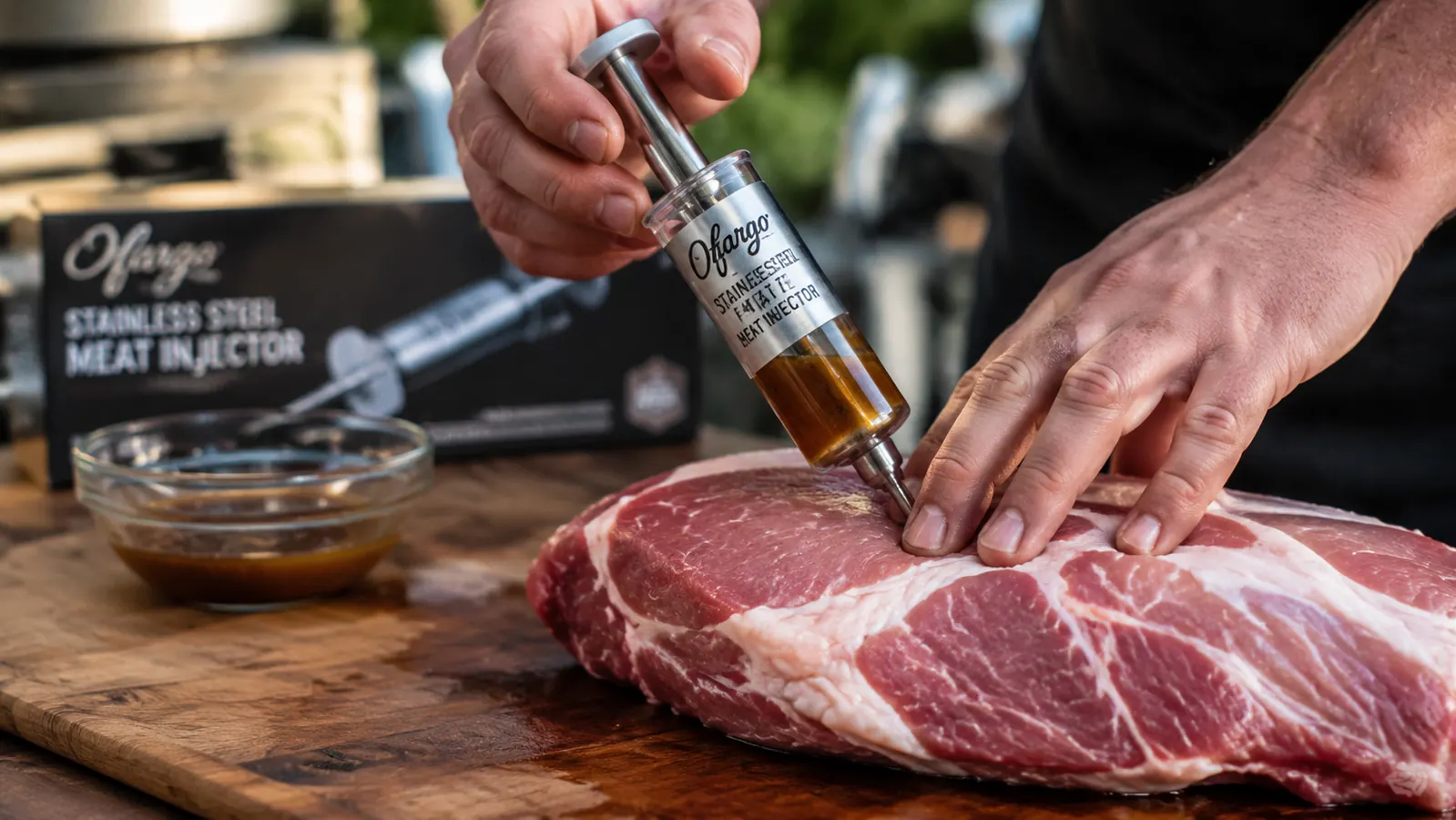
I started with the brisket that sent me shopping in the first place. I made a simple beef tallow and beef broth injection, added a splash of Worcestershire and some kosher salt, warmed it up so the tallow would flow, and loaded the Ofargo. My pattern was a one-inch grid across the flat, going in at a 45-degree angle and withdrawing the needle slowly while pressing the plunger so the liquid distributes along the whole channel rather than pooling in one spot. The 2-oz barrel holds a useful amount so I was not constantly reloading, but I did fill it five or six times for a full packer brisket.
On pork shoulder I got a little more adventurous. I injected with a brown sugar and apple cider mix for a pulled pork I did in late June, and then a few weeks later tried a straight pineapple juice injection to see if the enzymatic action would do anything noticeable to texture. It did make the surface meat a touch softer than I expected, which I would call a lesson rather than a disaster. For whole chicken I used the large-bore needle with a garlic butter mix, and for the turkey I ran plain salted chicken stock because I did not want to mess with my family's expectations at Thanksgiving.
All told I estimate around 25 to 30 cooks with this injector across the season. That is more than enough time to figure out whether a piece of gear is durable or just looks nice in the photos.
The Four Needles: What Each One Actually Does
This is the part of the Ofargo kit that sets it apart from every single-needle plastic injector I have owned. You get four needles, and they are not just different lengths. They serve genuinely different purposes, and once you figure that out the kit makes a lot more sense.
The straight needle with perforations along the shaft is the one I reach for most often on brisket and pork shoulder. The side holes mean the marinade disperses outward as you pull back, so you get a broader cone of flavor instead of a tight tunnel. It is very forgiving with thinner liquids like beef broth or apple juice. The angled tip needle is better for pushing into tight spots, like the area around a bone in a chicken thigh or the thick part of a pork butt near the shoulder blade. It lets you redirect the needle a bit without tearing up the meat.
The fine-gauge needle is the one you need for thin-walled proteins like chicken breast, where a larger needle would cause visible damage to the flesh. I also used it for injecting under the skin of a turkey breast, where you want the needle to go in without blowing a hole you can see. The large-bore needle is for thick marinades that would clog the perforated needle in a hurry. Garlic butter with actual garlic pieces in it needs the large bore. Any marinade with whole spices, dried herbs, or citrus pulp needs the large bore. I clogged the perforated needle exactly once, on a marinade with too much black pepper ground too coarsely. Switched to the large bore and had no more issues that day.
The side-hole perforated needle distributes marinade in a cone, not a tunnel. Once I understood that, my brisket flat stopped coming out with dry patches between injection points.
Build Quality After a Full Season
The barrel is 304 stainless steel and it looks exactly the same now as it did when I unpacked it. No pitting, no discoloration, no visible wear on the threads where the needle attaches. I have washed this thing probably 60 times between hand washing and a few dishwasher runs, and the metal has held up with zero complaints. Compare that to the last plastic injector I owned, which developed a hairline crack in the barrel by mid-summer and started weeping marinade onto my hand during injection.
The plunger has a silicone tip that creates the seal inside the barrel. It still seals well, but I will note that the O-ring that sits at the top of the barrel began to show some swelling after about three cycles through the dishwasher on the heated dry setting. Ofargo includes replacement O-rings in the kit, which tells me they know this happens and planned for it. I swapped the O-ring once this season. That took about 90 seconds and cost me nothing. If you run this thing through a dishwasher every time you use it, plan on replacing the O-ring every couple of months.
The needles thread on and off cleanly. I have not stripped a thread yet. The only needle I treat with extra care is the fine-gauge one because its tip is narrow enough that I worry about bending it if I store the kit loosely in a drawer. I keep everything in the original plastic case it came in, which latches and fits in a kitchen drawer without drama.
Injection Timing and What Actually Affects Juiciness
I have tested two timing windows this season: injecting the night before and wrapping in plastic overnight, versus injecting the morning of the cook about an hour before the meat goes on. For brisket and pork shoulder, the overnight injection produces noticeably more even moisture distribution through the muscle. The liquid has time to wick outward from the injection channels. For chicken and turkey, I prefer same-day injection because the thinner breast meat can start to have a slightly soft texture if it sits in an enzymatic marinade overnight. For a simple salted stock injection in poultry, overnight is fine.
The other thing that made a bigger difference than I expected is injection temperature. If you are using a fat-based marinade like beef tallow and broth, the tallow needs to be warm enough to flow freely when you load the syringe. I keep a small saucepan on the stove and warm the injection mixture to about 140 degrees before loading. Cold tallow will congeal in the needle before you have finished the first section of the flat. This is not an Ofargo problem, it is a physics problem, but knowing it saves a lot of frustration.
For a full walkthrough of injection grid patterns and marinade ratios for brisket specifically, check out my guide on how to inject brisket for juicier results. That article goes deeper into spacing, depth, and how much total liquid to use per pound.
Cleanup Honestly Assessed
This is the area where the Ofargo earns the most goodwill compared to every cheap plastic injector I have used. Cleanup is genuinely not a chore. After a cook I disassemble the needle, pull the plunger out of the barrel, and flush everything under hot running water. For a simple broth injection that takes about 30 seconds. For a butter or fat-based injection I run hot soapy water through the barrel with the plunger a few times and then let everything air dry on the dish rack. The stainless does not hold onto fat the way plastic does, so there is no greasy residue left behind after a good rinse.
The needle cleaning is the step that takes the most attention. I use the small cleaning brush that came with the kit to push through the bore of each needle I used, and then flush with hot water. For the perforated needle I make sure to get into each of the side holes. It sounds fussy but the whole process takes under three minutes. I would rather spend three minutes on cleanup than spend the first five minutes of my next cook unclogging a needle that sat dirty in the drawer.
Where It Falls Short
No review is honest if it does not find something real to complain about. Here is what I have actually run into.
The 2-oz barrel capacity means a lot of reloading on a large brisket. A full 14-pound packer takes somewhere around 10 to 12 ounces of injection liquid if you are being thorough, so you will refill the barrel five or six times. That is not a problem exactly, it just adds time. If you have a busy cook day with multiple large cuts going on at the same time, this can feel a little tedious. Some injectors on the market come in a 4-oz barrel, which would cut the reloading in half. I have adapted by keeping my injection liquid in a small bowl or cup and using the syringe like a dip-and-draw tool, which speeds things up.
The O-ring durability issue I mentioned above is real if you dishwasher it aggressively. It is manageable because replacement O-rings are included, but it is a nag. Hand washing extends the O-ring life significantly in my experience.
Finally, the case hinge is plastic and feels like the weakest part of the whole package. Mine has a small stress mark on it from where I dropped the case on the garage floor. The injector itself was fine, but the case might not survive repeated drops. I would not put it in a bag with heavy cast iron.
What I Liked
- 304 stainless barrel shows zero corrosion or wear after a full season of use
- Four distinct needle types genuinely serve different proteins and marinade viscosities
- Disassembles fully for cleaning in under two minutes
- Does not leak or weep when the seal is good, unlike most plastic injectors
- Replacement O-rings included so the one wear item is already covered
- Threads engage cleanly and have not stripped through dozens of needle changes
- Warm, non-slippery grip even with wet or marinade-covered hands
Where It Falls Short
- 2-oz barrel means 5 to 6 refills for a full brisket flat
- O-ring swells and needs replacement every few months if you dishwasher it regularly
- Case hinge is plastic and feels like it would not survive rough handling
- Fine-gauge needle is narrow enough to bend if stored loosely without the case
How It Compares to What I Used Before
Before the Ofargo I had used two different injectors. The first was a cheap plastic one from the grocery store checkout aisle. It clogged constantly with anything thicker than plain broth, the barrel cracked, and the needle wobbled in the socket after about four uses. The second was a mid-range plastic kit that lasted about a season before the plunger tip degraded and stopped creating a seal. Both ended up in the trash.
The main upgrade the Ofargo delivers is not complexity, it is durability combined with actually usable needle options. The stainless does not absorb flavors or odors, so a unit I used for garlic butter on chicken last month does not smell like garlic this week. The multi-needle kit means I stopped trying to push herb-heavy marinades through a needle that could not handle them. If you want to see how the Ofargo compares directly against the Cajun Injector kit that a lot of people default to, I wrote a full breakdown in the Ofargo vs Cajun Injector comparison.
Who This Is For
The Ofargo injector is the right buy if you regularly smoke brisket, pork shoulder, or whole birds and want a tool that will last more than one season. If you cook for a crowd, if you like experimenting with fat-based or thick herb marinades, or if you have been frustrated by plastic injectors that clog or leak, this kit solves exactly those problems. It is also a good fit if you want to start injecting but do not yet know which needle type you need for each protein, because the kit gives you all four and lets you figure it out as you go.
Who Should Skip It
If you grill mostly thin cuts like steaks, chicken breasts, or pork chops, injection is not really the right technique for those anyway, and this kit would sit unused. A good dry brine or surface marinade does more for thin cuts. If you smoke one or two big cuts per year and do not mind using a basic plastic injector for that occasional cook, the price step up to stainless probably does not pay off at that frequency. And if you only ever inject with plain, thin apple juice or plain stock, even the cheapest plastic injector will handle that without clogging, so the needle variety in this kit is not adding much value for you.
Five months and two dozen cooks later, it is still the first thing out of the drawer.
The Ofargo stainless injector kit with four needles is what I would buy again if this one disappeared tomorrow. Check today's price on Amazon and see if the kit ships with the replacement O-rings, which makes the O-ring wear issue a non-problem.
Amazon Check Today's Price on Amazon →