
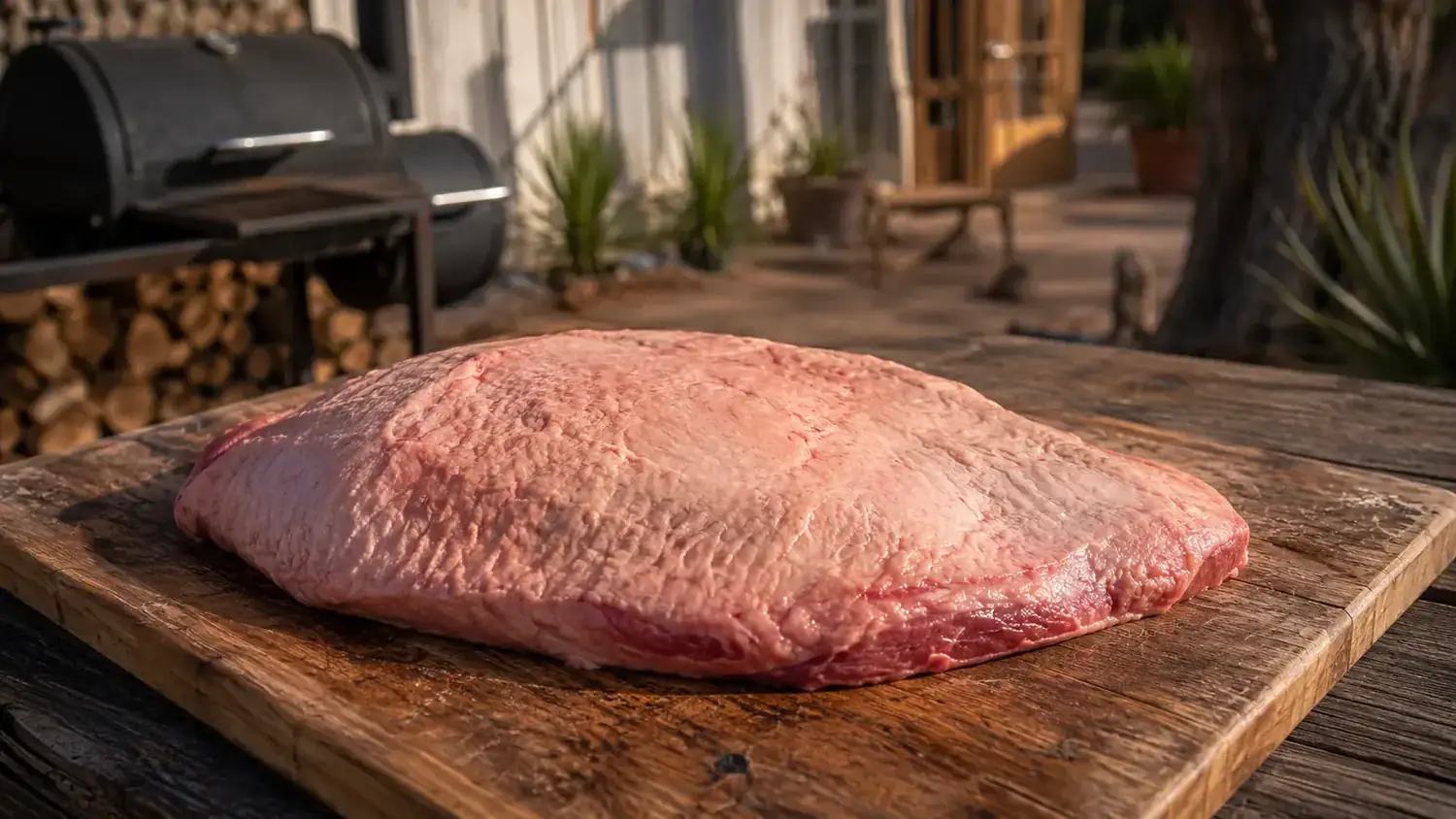
The flat is the brisket's Achilles heel. You can nail your temperature, hold your stall, rest it for two hours, and still pull out a flat that eats like a dry sponge in the middle. I learned that the hard way at my first big family cookout, when I served fourteen people a brisket that looked gorgeous on the outside and was dry as a cracker six inches in. My dad would have never let that happen. He injected every brisket he ever smoked, and once I started doing the same, I finally understood why.
Injecting pushes liquid and flavor directly into the center of the meat, where a surface rub and bark can never reach. It compensates for the long, hot cook that drives moisture out. For a full packer brisket running 12 to 14 hours at 225 to 250 degrees, an injection is not a luxury. It is protection. This guide walks through every step: choosing or mixing your marinade, loading the syringe, mapping the grid, knowing how deep to go, figuring out how much liquid per pound, and what to do with the meat after you pull the needle out.
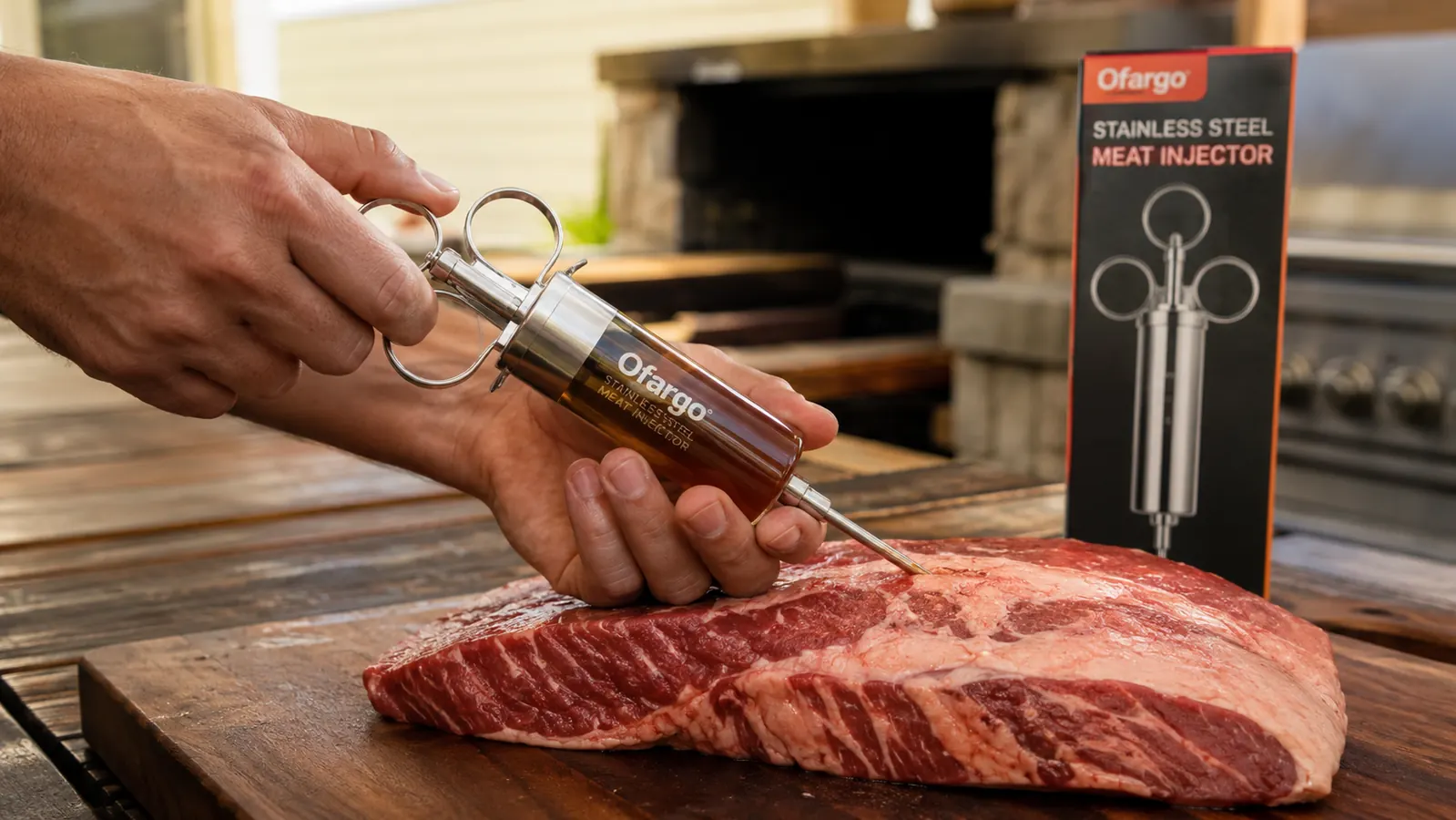
The injector I use on every brisket: stainless steel, four needle options, easy to clean
The Ofargo Stainless Steel Meat Injector Syringe Kit (4.7 stars, over 5,600 reviews) comes with four different needles including a side-hole needle that distributes marinade evenly without channeling. It is the tool I recommend in this guide.
Amazon Check Today's Price on Amazon →Step 1: Choose or Mix Your Injection Marinade
Your injection marinade has one job: add moisture and deepen flavor in the muscle fibers without overpowering the beef. For brisket, you want something savory and slightly rich. My go-to is simple and food-safe: one cup of beef broth (low sodium so you control the salt), two tablespoons of Worcestershire sauce, one tablespoon of soy sauce, one teaspoon of onion powder, and half a teaspoon of garlic powder. Whisk it cold. That is it.
A few rules that matter. First, keep the marinade thin. If you are adding butter, melt it fully and let it cool until it is liquid but not solidified. Chunky marinades with minced herbs or whole spices will clog your needle every single time, no matter what injector you use. Second, never inject a marinade that contains sugar syrup or a high-sugar base. Those char on the surface and can create off-flavors during a long smoke. Honey is fine in small amounts. Brown sugar in a liquid injection is not. Third, keep everything cold. Mix the marinade in the refrigerator the night before if you can. Injecting warm liquid into raw meat and then leaving it on the counter is a food safety problem.
If you prefer a commercial option, phosphate-based competition injectors like Butcher BBQ Brisket Injection are popular on the competition circuit because the phosphates help the meat retain water under heat. They work well. I still prefer the homemade broth base for a family cook because it is cheaper, you control every ingredient, and the result is plenty juicy.
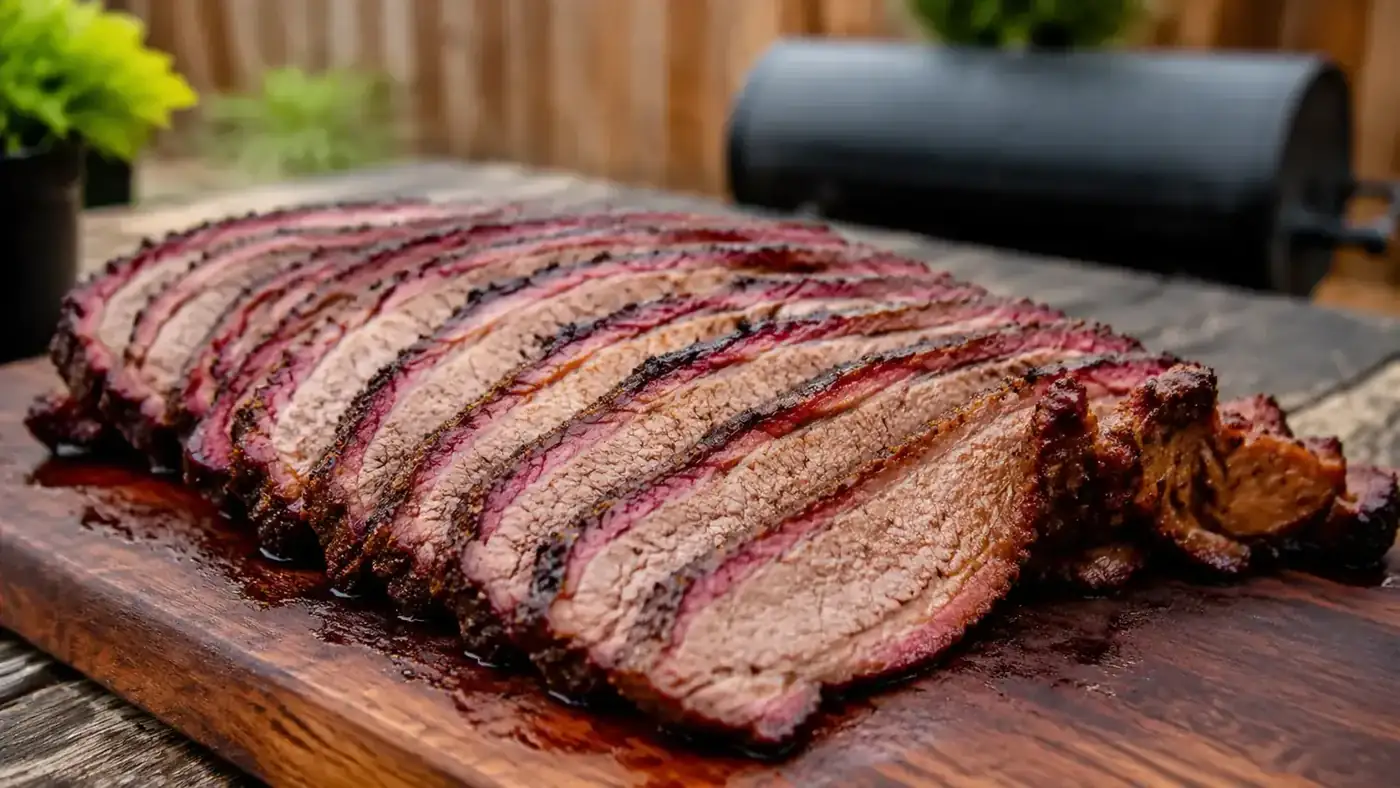
Step 2: Choose the Right Needle and Load the Syringe
Needle choice matters more than most people think. The Ofargo kit comes with four needles and each has a purpose. For brisket, use the side-hole needle, which is the one with holes along the side wall rather than a single opening at the tip. That design disperses the marinade in a cone around each entry point instead of squirting it all in one direction and channeling it into a single pocket. The result is more even distribution through the muscle.
To load the syringe, pull back the plunger completely, submerge the needle tip in your marinade bowl, and slowly push the plunger in and out a few times to prime it and clear air bubbles. Then draw the barrel full. A full pull on the Ofargo barrel gives you about 2 ounces. Hold the syringe upright and push the plunger until a small drop appears at the needle tip. That confirms the air is out and you are ready to inject.
Step 3: Map Your Injection Grid Pattern
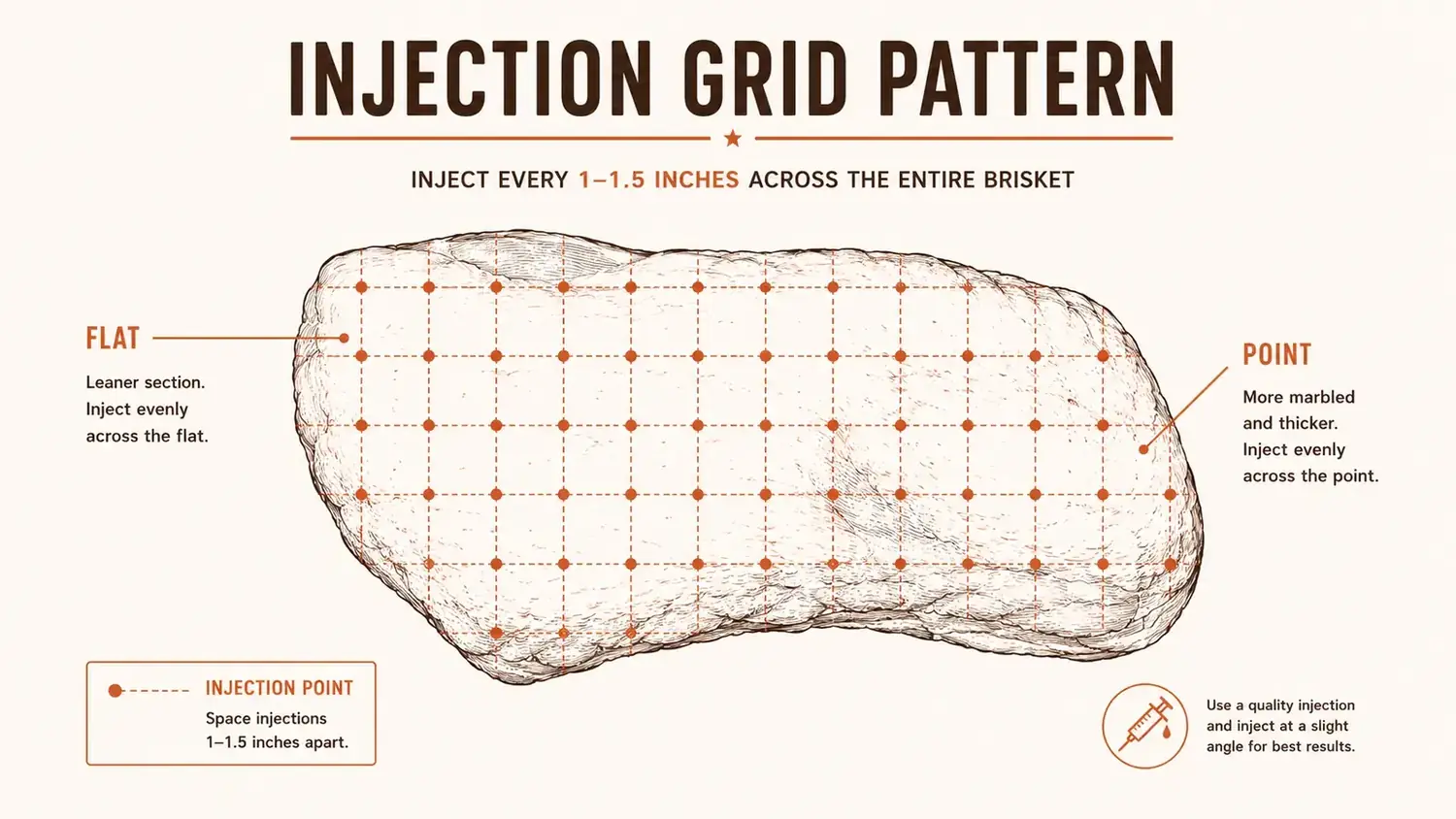
Brisket injection works on a grid. You are not just poking the meat randomly. You want entry points spaced roughly one to one and a half inches apart across the entire surface of the flat and into the point. The flat is the priority because it is the leaner, drier part of the cut. The point has more intramuscular fat and will stay moist on its own. Give it a pass, but spend most of your time and marinade on the flat.
Work in rows. Start at one end of the flat and move the needle along rows parallel to the short side, keeping your entry points about an inch apart within each row and about an inch and a half between rows. You do not have to be precise to the centimeter. The goal is reasonable coverage so no pocket of lean muscle goes more than an inch without receiving some injected liquid. Once you have covered the flat, inject the point in a looser grid since the fat is doing much of the moisture work there anyway.
Step 4: Set Your Needle Depth and Inject
Depth is where a lot of first-timers go wrong. Going too shallow means the marinade pools just under the surface and bleeds out when you handle the meat. Going too deep on a thin flat can punch through to the other side. For the flat, aim for one to one and a half inches of depth. On the thicker part of the flat and through the point, you can go up to two inches. On a standard full packer, the flat tapers from about two inches thick at the thick end down to less than an inch at the thin end. Adjust your depth as you work from thick to thin.
The injection technique is slow and steady. Insert the needle to depth, then depress the plunger slowly as you withdraw the needle toward the surface. This deposits marinade in a line through the muscle along the entire needle path rather than in one spot at the bottom. If you feel resistance or the marinade starts pushing back out of the entry hole, you are injecting too fast. Slow down. If you see the surface of the meat puff up and then rupture, you are injecting too much in one spot. Move to the next entry point and come back.
The flat is the priority. It is the leanest part of the brisket and the one that dries out first on a long smoke. Give most of your marinade to the flat, not the point.
Step 5: Calculate How Much Marinade Per Pound
A general rule for brisket injection is half an ounce to one ounce of marinade per pound of raw meat. For a 14-pound full packer, that means seven to fourteen ounces of injected liquid, or roughly one to two cups. I run at the lower end of that range, about half an ounce per pound, because the brisket also has a dry rub and will spend twelve-plus hours picking up moisture from the smoker environment. Over-injecting creates meat that tastes more like a marinade sponge than beef.
With the Ofargo syringe holding about two ounces per full draw, a 14-pound brisket at half an ounce per pound needs roughly three to four full syringes of marinade spread across the flat and point. That is a manageable amount. Mix about one cup of marinade total and you will have a little left over to baste with or discard. Do not reuse any marinade that the needle has been dipped in. Treat it the same as any liquid that has contacted raw meat.
Step 6: Rest the Brisket After Injection, Then Apply the Rub
After injecting, the brisket needs to rest in the refrigerator before the cook. This is both a food safety step and a flavor step. The resting period gives the injected liquid time to distribute through the muscle fibers and for the surface to dry slightly so your rub adheres better. Minimum rest is one hour in the fridge. Overnight is better. I inject the night before, wrap the brisket loosely in plastic wrap, and refrigerate it. The next morning I pull it, apply the rub, and let it come toward room temperature for about 45 minutes while the smoker comes up to temp.
Apply your dry rub after injection, not before. The injection creates a slightly wet surface that helps the rub bind. Salt, coarse black pepper, and garlic powder is a classic brisket rub. Keep it simple. The injection is doing the interior work. The rub is building the bark.
What Else Helps Keep Brisket Moist on a Long Cook
Injection is the single biggest lever for brisket moisture, but a few other practices compound the result. Wrapping in butcher paper or foil when the brisket hits the stall (usually around 160 to 170 degrees internal) traps the injected moisture that is trying to escape as steam. Butcher paper breathes slightly more than foil and maintains better bark texture. Foil wraps tighter and is a stronger moisture trap. Both work. I wrap in butcher paper and rarely have a dry flat.
The post-cook rest is as important as the injection itself. Pull the brisket when the probe reads 200 to 205 degrees and the flat probes like butter, then wrap it tightly in a second layer of butcher paper and let it rest for at least one hour, or up to four hours in a dry cooler. The muscle fibers relax and reabsorb the juices that have migrated to the center during the cook. Slice too soon and those juices run straight onto the board instead of staying in the meat.
For more on the Ofargo injector itself, including how the four needles perform on different marinades after dozens of cooks, see the Ofargo Meat Injector long-term review. And if you want to understand what injecting does differently from surface brining or rub marinades, the 10 reasons a meat injector makes backyard BBQ better article covers the full picture.
Ready to stop pulling dry brisket flats off your smoker?
The Ofargo Stainless Steel Meat Injector Kit is the tool I use for every large cut. Stainless steel barrel, four needle types, dishwasher safe, and budget-priced. Over 5,600 backyard cooks give it 4.7 stars.
Amazon Check Today's Price on Amazon →